
A useful football prediction begins with a structured match analysis, not a guess based only on club reputation. A famous team can lose when its schedule is congested, key players are missing or its opponent has a tactical advantage. Supporters who want to understand a fixture should examine several types of evidence and keep facts separate from opinions. This guide gives WinnerFC readers a repeatable framework for analysing matches discussed in football previews and betting education articles.
Start with recent form—but add context
Look at each team’s recent results, goals scored and goals conceded. Five wins in a row may look impressive, but the strength of the opponents matters. A team may have faced several clubs near the bottom of the table, while another may have played difficult away fixtures. Check whether performances were convincing or whether results depended on late goals, penalties or unusual events.
Compare home and away performance
Some clubs perform differently depending on where they play. Review home results for the home team and away results for the visitors. Consider goals for and against, clean sheets and the quality of opposition. Avoid treating a small sample as a permanent pattern; a few matches can be distorted by red cards, injuries or unusual finishing.
Check player availability and tactics
Injuries, suspensions and rotation can change a team’s shape. A missing centre-back may affect defensive organisation; an unavailable striker may reduce pressing or penalty-box threat. Look at how each coach sets up: high pressing, deep defending, quick transitions or possession-based play. The key question is how one team’s strengths interact with the other team’s weaknesses.
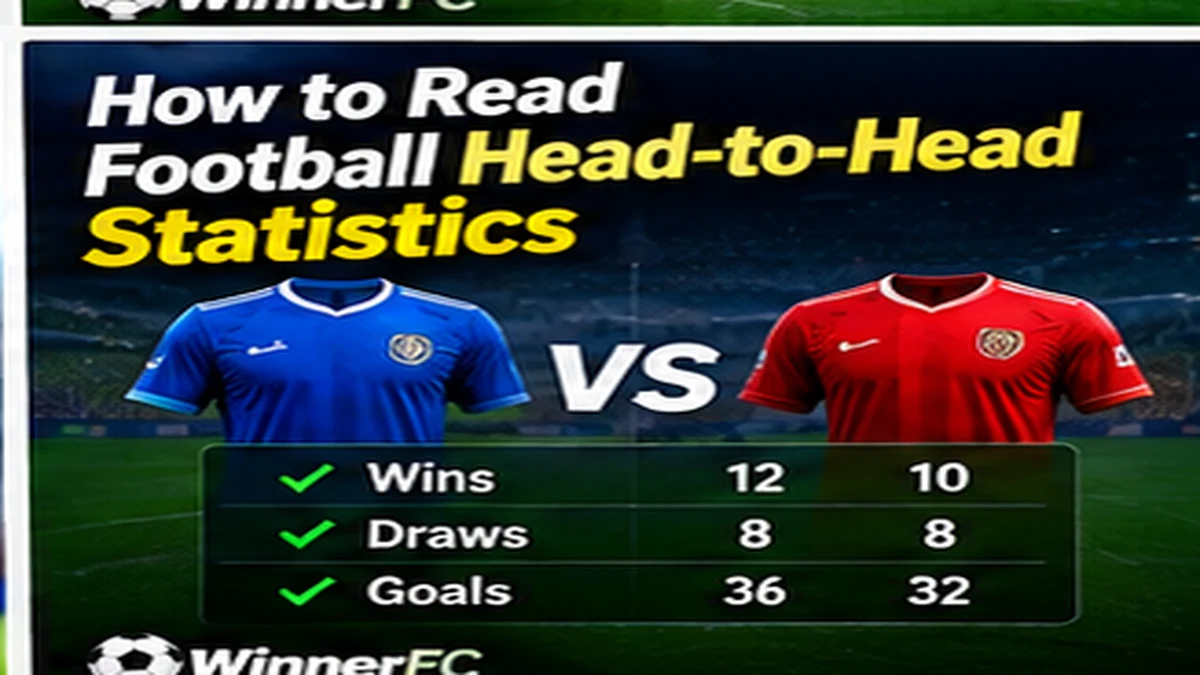
Use head-to-head records carefully
Previous meetings can provide background, especially when there is a recurring tactical matchup. However, old results may involve different managers, players and circumstances. Give more weight to current performance and team news than to a long-ago scoreline. Head-to-head data is context, not proof of what will happen next.
Build a balanced conclusion
A responsible preview should explain the evidence on both sides, identify uncertainty and avoid claiming a guaranteed result. If the data is mixed, say so. If important team news is unavailable, make that limitation clear. A prediction is an editorial estimate, not a fact. Readers should never treat it as a reliable source of income or a reason to risk money they cannot afford to lose.
Frequently asked questions
Which statistics matter most in football analysis?
Recent performance, goals for and against, home-away records, player availability and tactical matchups are useful starting points.
Are head-to-head results reliable for predictions?
They can add context, but old meetings may not reflect current squads, managers or form.
Can statistics guarantee a correct prediction?
No. Statistics help describe performance, but football outcomes remain uncertain.